
Wednesday, September 26, 2012
Komorowski at the New York Consulate
President of Poland Bronisław Komorowski and his wife Anna attended an event at The Consulate General in New York on September 26 honoring Polish natives living in the United States and Polish Americans for contributions in the continuance of culture, the promotion of Poland, and the cultivation of Polish businesses. Full coverage in the update.

Tuesday, September 25, 2012
PERFORMANCE - Śląsk Returns with Two Tours

The Śląsk Song and Dance Ensemble of Poland will tour the United States in two separate tours by two
different producers. The first tour
under the auspices of Polski Express
in October and November; the second will take place in March 2013.
 Zespół Pieśni i Tańca
"Śląsk" was founded in 1953 by composer Stanisław Hadyna and is
named after the southwestern Śląsk region. The company originally
focused on the folk traditions of this particular region, but has since
expanded its repertoire to include many Polish regions. Based in Koszęcin, the ensemble has performed
for over 20 million people worldwide.
 The Śląsk ensemble performs the
masterful music of Hadyna extracted from folk melodies, and has worked with
such notable Polish composers as Wojciech Kilar. Their program features much of the brilliant
stage work of its founding choreographer Elwira Kamińska.
In Youngstown, OH, the Śląsk vocal ensemble will celebrate the dedication of the Shrine to Our Lady of Częstochowa at St. Columba Cathedral on October 30, by singing the mass prelude and later being the entertainment at the fundraising dinner following.
The following dates have been confirmed:
·
October: 26 – Chicago, IL; 27 – Detroit, MI; 28 –Chicago; 29 - Cleveland,
OH; 30 – Youngstown, OH
·
November: 2 - Lodi, NJ; 3 -New Britain, CT; 4 – Stamford, CT

Possible dates to be scheduled in Pittsburgh
and Philadelphia. For additional dates
and venue information check: www.polskiexpress.com, (860) 826-5477;or www.pajtoday.blogspot.com.
The March tour that already includes the
Bronx, Schenectady, NY, and Princeton, NJ will be announced as the itinerary is
completed.
FILM: Restored Print - Ashes and Diamonds

As part of its See it Big! series, Wajda’s classic film will be presented in a new, state-of-the-art digital restoration, revealing the original richness of the work of cinematographer Jerzy Wójcik and a vivid impression of Wajda’s strong visual sense. The screening on October 14 will be introduced by the film historian and critic David Thomson, and will be followed by a discussion with Thomson and Sony Pictures Classics co-president and co-founder,Michael Barker.
 Beautifully photographed and brilliantly performed, Wajda’s heroic 1958
drama is hailed by many as one of the most important Polish films of all time
linking the fate of a nation with that of one man. Based on the novel of the
same title by Jerzy Andrzejewski, Ashes and Diamonds tells the story of
a disillusioned Home Army soldier, Maciek Chełmicki, a tragic hero, fated by the forces of history to
commit a crime.
 Compellingly played by screen legend, Zbigniew Cybulski, Chełmicki – a
representative of Poland’s “lost” war generation – became a James Dean-like
cult figure for an entire generation of Polish audiences.
Wajda’s third film is not only one of his most important works, but also
the supreme achievement of post-war Polish cinema. On one level Ashes and Diamonds is
a straightforward, suspense thriller and on another it has a dimension of high
tragedy as in ancient drama. Deep down
it has a broader meaning, sometimes missed by non-Polish audiences.
The film’s truth and strength lies in the
way it caught certain momentous historical phenomena which appeared for the
first time in 1944, were still in evidence in 1958, and to some extent still
linger to this day. It has all the
ingredients of a national epic – showing individual destinies being reshaped
during turmoil.
 Many strands from the Polish artistic
tradition found their way into the film.
There are clear links to nineteenth-century Romanticism; to Norwid, an
expatriate poet, from one of whose verses its title is taken; to Juliusz Słowacki
and his drama; and most deliberately to the turn-of-the-century Kraków writer and
painter Stanisław Wyspiański. His Wesele
(The Wedding), still one of the most vibrant plays in the Polish theatrical
canon, is a great parable of the nation’s situation in his day. It contains an uncanny riveting scene,
repeated almost literally in Ashes and Diamonds. At the end of a country wedding, the
guests shuffle through a grotesque dance which anticipates a fateful change in
their lives and their country. The Old Establishment now making their final
exit with a sense élan to the strains of Michał
Kleofas Oginski’s
polonez – “Pożegnanie Ojczyzny”
(Farewell to Homeland). Wesele is Wajda’s favorite play and
fourteen years after Ashes and Diamonds, he captured it on film.
 On the
most base level, in Ashes and Diamonds Wajda shows that on this
particular night a man caught up in his past under occupation, tired of heroism
and beginning to feel the possibility of another and better life finds himself
in a position from which there is no escape.
The director fully put into
practice his principle that “the methods must be emotional in order to
influence, and the heroes emotional in order to move.”
Museum of the Moving Image, 36-01
35th Avenue, Astoria, NY; http://www.movingimage.us/visit/directions.
WASHINGTON, DC: Book signing event - Unvanquished: Joseph Pilsudski
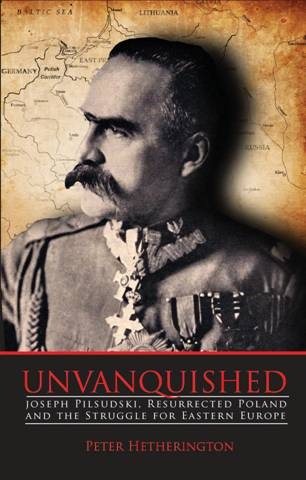
DVD RELEASE: Andrzej Wajda’s Korczak

Directed by Academy Award winning director Andrzej Wajda with a
screenplay by Agnieszka Holland, the film features a riveting performance by
Wojciech Pszoniak. Many have identified Korczak as an
inspiration for Steven Spielberg’s Schindler’s List, and its influence
is unmistakable, and Spielberg wrote that it is "one of the most
important European pictures about the Holocaust." Available at:
www.kinolorber.com.
NEW YORK: Wiesław Myśliwski – literary discussio

The event will be presented by The Mid-Manhattan Library and the Polish
Cultural Institute New York on Thursday, September 27 at 8:00 pm - Corner Room
Gallery, 455 Fifth Avenue, New York, NY.
Admission is free with registration at www.europeanbookclub.org.
LOS ANGELES: Film Festival

The 13th Annual Polish Film Festival in Los
Angeles celebrating the greatest achievements
of Polish filmmakers will be presented by The
Polish American Film Society on October 9-18.
The Festival will open with our
star-studded gala during which both Polish and American moviemakers will walk
the red carpet at Hollywood's legendary Egyptian Theatre. Subsequent screenings will take place at the Laemmle's
NoHo7 and at the Village Theater in Orange Country.
At the Gala Opening, Waldemar Krzystek’s 80
Million (80 milionów) – Poland’s submission to the 2013 Oscars in Foreign
Language Category will be screened. For
more information and the full schedule check:
www.polishfilmla.org.
HONORS: Storozynski receives Award

HUDSON VALLEY, NY: Polonaise Ball
In observance of Polish Heritage
Month, the Hudson Valley Polonaise
Society will be holding their annual Polonaise
Ball on October 13th from
6 to 10 pm. Dancers will perform the
Polonaise, a centuries old dance of noblemen. This stately dance, which will be
performed in traditional costumes, usually preceded formal public ceremonies.


Music will be provided by the Ray Skorka and
the Ablemen Orchestra and a prime rib dinner will be served. The dance will
take place at the Elk’s Club at 48 Prospect Street in Middletown, NY. For more
information and to reserve your tickets contact Barbara at (845) 856-7526, or
Hilda at (845) 294-9254. Reservations must be made by October 8th. Tickets will
be mailed upon request.
HONORS: Larry Walk in Hall of Fame

Walk hosts the radio show from his Austintown home on AM stations WSOM and WKTX with his wife Diana. He has also earned the Lifetime Achievement Award given by the United States Polka Association.

FILM: A Deportation Love Story

The award-winning film -
Tony & Janina's American Wedding is
making the rounds with screenings throughout the country. The
documentary film follows a Polish American family through the red tape of the
current U.S. immigration system, telling the untold human rights story of
post-9/11, that every undocumented immigrant in America faces today.
After 18 years in
America, Tony and Janina Wasilewski’s family was torn apart when Janina was deported
back to Poland, taking their 6 year old son Brian with her. Set against the
backdrop of the Chicago political scene, and featuring Illinois Congressman
Luis Gutierrez at the heart of the immigration reform movement, this film
follows the family’s 3-year struggle to be reunited, as their Senator Barack
Obama rises to the Presidency.
TRIBUTE: Jan Sawka (1946-2012)

Artist, printmaker, designer and
architect Jan Sawka suffered a fatal heart attack in his studio and home in
High Falls, New York recently. One of the premier artists of the famed Polish
Poster School and a leading artist of the Polish and American counter-cultures,
Sawka designed art sets for playwright Samuel Beckett, The Grateful Dead band
and Steve Winwood among others as part of his theater projects. At the time of
his death, he had just completed a multimedia spectacle titled “The Voyage”
that will tour with Grateful Dead drummer Mickey Hart’s ensemble in 2013.
 His
paintings, posters and prints are in over 60 museums around the world and he
has had over 70 solo shows at international museums and galleries.
Sawka’s oppositionist activities lead to his forced exile from Poland in 1976. In 1981, when martial law was imposed in Poland, the AFL-CIO led a bipartisan fundraiser that sold Sawka’s Solidarity poster in the millions to provide immediate support to the besieged Solidarity Movement. The image of a button with the Solidarity-logo as a sun above a landscape of crowd-like trees became an icon of the rebellion.
He was born in the Zabrze in the Śląsk region to an architect father and linguist mother. His childhood was overshadowed by his father’s Stalin-era political imprisonment. Sawka completed two Masters Degrees: in painting and print-making and in architectural engineering and became a star of the Polish Poster School.
He moved to New York City in 1977 and quickly became part of the American art scene. He produced numerous editorial page commentary drawings for The New York Times; exhibited his paintings in galleries in New York, Los Angeles and abroad; and designed for theaters. Sawka’s prints and posters comprise the largest collection of works on paper in the collection of the Library of Congress.
A memorial exhibition at ACA
Galleries in New York City is being planned.
POLONIA: A Little Bit of Poland in Brooklyn

Summer time is at a close and if you didn’t have the chance to get to Poland or the means to afford such a trip, one still has the opportunity to experience the vitality of a Polish existence. One of my favorite retreats to immerse myself in the language, culture and tastes of Poland is the New York City enclave of Greenpoint-Brooklyn.
Once a post-industrial and residential
neighborhood with its main claim to fame being a thriving Polish community,
Greenpoint now epitomizes the Brooklyn renaissance. There are more Polish
opportunities than ever before. Among the mixed blocks of Poles, Italians and
Hispanic families and the much-loved Monsignor McGolrick Park, there is the
distinct mark of Polonia.
Check out the Janusz Skowron’s Polish Art
Gallery in Starbucks, the bookstores, bakeries, Steve’s deli (where they offer you
kielbasa
samples off a knife’s point), restaurants such Karczma, Królewskie Jadło, and
Golden Café, Peter Pan Bakery for pączki doughnuts… and yes, there are
liquors store with everything imaginable - for your Krupnik or Żubrówka
fix. Come to Greenpoint - you will feel even more Polish, and won’t leave empty
handed!
LITERATURE: Gombrowicz Diary

Long out of print in
English, author and playwright Witold Gombrowicz's diary - Dzienniki has been revived in new
English edition with translation by Lillian Vallee.
Grombrowicz (1904–1969) had lived
in exile in Argentina since 1939, when he embarked on a diplomatic voyage to
the country with other writers just as Germany invaded Poland and World War II
broke out across Europe. He remained in Argentina for two decades, later discouraged
from returning to Soviet-occupied Poland and the hostile communist regime. His
works, which had not drawn much attention before the war, were entirely banned
in Poland due to the writer's stance towards the regime. He gained fame only during the last years of his
life, but is now considered one of the foremost figures of Polish literature.
The new edition of the diary brings
together three volumes that were previously published separately between
1988-1993, along with some previously unpublished writings originating in 1966-1969
– now arranged in their original chronological order.
Witold Gombrowicz is
the author of Ferdydurke, Trans-Atlantyk,
Cosmos, and Pornografia, along
with plays. His diary, have been
translated into more than thirty languages.
For more information on Gombrowicz, see the official website dedicated
to his life and works: www.gombrowicz.net.
POLONIA: Lufthansa Prize – Two Tickets to Poland
 Tymothy Stoll was named the grand prize winner of Lufthansa Airlines’ “Celebrate Polonia”
photo competition, which occurred in conjunction with the company’s new service
to Poland. The focus of the contest was to "showcase how you cherish and
celebrate your Polish heritage."
Stoll, a Cleveland area Polish heritage fanatic sent a photo of Zespół
Góralski Siumni of the
Polish Highlanders in South Chicago.
The prize is a pair of round-trip tickets to
Poland. “I would like to travel during a
holiday time, like Christmas or Easter, but I haven’t booked my trip yet,” said
Stoll. “Now I am trying to put together the money to cover costs of hotels and
ground travel.”
HUDSON VALLEY, NY: Polonaise Society News

Polish
Language Classes
Adult Polish
Language Classes for the Fall season will begin on September 17. The course
will run for 10 weeks each Monday from7:30 until 9:30 pm at the CYO Building,
662 County Rte. 1, Pine Island, NY until November 19. We have classes for
beginners, intermediate and advanced. Registration will take place at 7:15 pm.
Contact Barbara prior to the first class at 845-258-4425 or e-mail at
basiamorgie@aol.com.

Free Polka Classes
Beginning
September 12 free weekly polka dance instruction classes will take place at the
PLAV Post #16, Legion Road in Pine Island. The various figure dances will be
featured, along with the waltz, oberek, and the polka! For children ages 6 to 15 the class will run
for 6 weeks from 6:30 to 7:30 pm (ending October 17); adult classes run for 10
weeks (ending November14) from 7:45 to 8:45 pm. For information, call
845-294-9254 or 845-258-4721 or email: austriangirl283@yahoo.com.
ART: Gubernat Retrospective Exhibit

Frank Gubernat received M.A. degree in Mixed
Media Printmaking from Montclair State University, B.F.A. degree in Advertising
Design from Rochester Institute of Technology and Supervisor of Art Certificate
from Seton Hall University. He worked in
advertising as a free-lancer and in an ad agency; in a graphic studio with an
emphasis on packaging point of sales displays.
The Skulski Gallery is located at 177
Broadway in Clark, New Jersey, just of exit 135 from the Garden State
Parkway. For more information contact: aknowak@verizon.net
POLONIA: Agata Khoury – Polish Leadership program

Polish Youngstown Inc. announced that Agata Lyda Khoury, a resident of
Poland, Ohio resident, recently completed the School for Leaders for the Polish Community
from North America program (Szkoła Liderów Polonijnych Ameryki Północnej) in Warsaw, Poland.
She was selected from hundreds of applicants in the United States, Mexico and
Canada, Khoury and secured one of the 30 spots in the program.
Created by the national Polish Senate, this
all-expense paid program supports the development of leadership skills among
participants to make their work for the Polish community abroad more
effective. The School focuses on the
strengthening of participants’ ties with Poland by getting them acquainted with
contemporary Poland.
Polish Youngstown Founder and Art Director,
as well as Co-Director of the Krakowiaki
Polish Folk Circle, Agi was born in Poland and moved to Ohio when she was
two years old. She has been back to visit family only six times.
"We were very excited that Agi was
selected because the selection was based on the work we have been doing here as
an organization during the last three years," said Aundrea Cika, director
of the nonprofit organization. "We know that she will represent us well
and bring back a wealth of ideas and connections that we can make use of moving
forward."
Other North
American participants included: Joanna Beugnon, Marta Borowiak, Mariola
Czarniak, Natalia Dmuchowska, Mateusz Domogala, Jadwiga Firstenhaupt, Ilona
Frederick, Lucas Grabiec, Maciej Konrad Hryniewicki, Ela Jamiolkowski, Kasia
Kaminska, Arkadiusz Kazimierski, Natalia Kusendova, Marcin Lewandowski, Joanna
Marks , Artur Orkisz, Agnieszka Pokropek, Kasia Polanska, Brigitte Rajacic,
Dominik Roszak, Gregory Rozdeba, Tomasz Rozdeba, Marcin Skarżyński, Marcelina
Sladewska, Matthew Stefanski, Pawel Sulzycki, Joanna Tomaszewski, Barbara
Waginska , and Monika Wilk.
1944 Warsaw Uprising Clip at Madonna Concert

Madonna's world tour has been surrounded by
controversy and the latest involved Catholic and veterans' groups in Poland
protesting against a concert by Madonna because it falls on the anniversary of
the Warsaw Uprising. The group argued
that it was inappropriate for Madonna to perform during the Polish capital’s
annual remembrance of the doomed 63-day uprising against Nazi occupiers, in
which an estimated 200,000 civilians died.
Responding to critics, Madonna showed a World War
II-era newsreel about the Warsaw Uprising against the Nazis during her concert
in the city on the anniversary of that 1944 revolt before the performance. Agence France-Presse reported that thousands
of fans applauded as the two-and-a-half minute film played.
Every year, Poles commemorate the
lives lost during the uprising. One Catholic group – Krucjata Młodych (Youth Crusade), had started an online campaign
urging people not to attend the concert. The group also held anti-Madonna Mass services and street prayer
sessions. Billboards around the capital
promoting the concert had been defaced with the sign of the Polish Home Army,
the largest underground army in Nazi-occupied Europe.
Subscribe to:
Posts (Atom)


